

Goodman Lantern helps B2B brands secure citations in AI-generated search answers by combining entity optimization, answer engine optimization, and strategic content distribution. This guide covers the eight critical pillars of AI visibility, including citation tracking, generative engine optimization, and B2B content strategy. We explain how to build the digital footprint required for LLMs to recommend your brand. For additional details, review the Contact Us for Professional.
Answer Engine Optimization
Answer engine optimization is the practice of structuring content to be directly extracted and cited by AI systems. Unlike traditional SEO, which focuses on ranking pages in a list of blue links, AEO focuses on becoming the specific source of truth for a query. AI models like ChatGPT, Perplexity, and Google's AI Overviews do not just rank pages; they synthesize information from multiple sources to generate a single, coherent answer. To be cited, your content must be concise, factual, and clearly structured. For additional details, review the Smart Content For Telecom.
Structuring for Extraction
AI engines prefer content that answers a question in the first 40 to 60 words. This is often called the "answer block." If your content buries the lead, the AI may skip it in favor of a competitor who provides a direct response. You should use clear headings, bullet points, and short paragraphs. Avoid complex sentence structures that confuse natural language processing models. The goal is to make it easy for the AI to "copy and paste" your insight into its generated response. For additional details, review the SEO for Banks and.
The Role of Semantic Clarity
Semantic clarity ensures that the AI understands the context of your claims. Vague language leads to vague citations or no citation at all. Use specific terminology relevant to your industry. For B2B brands, this means using the exact language your buyers use when asking AI assistants for recommendations. If you sell industrial software, use terms like "predictive maintenance" rather than just "software tools." This precision helps the AI map your content to specific user intents.
AI Citation Tracking
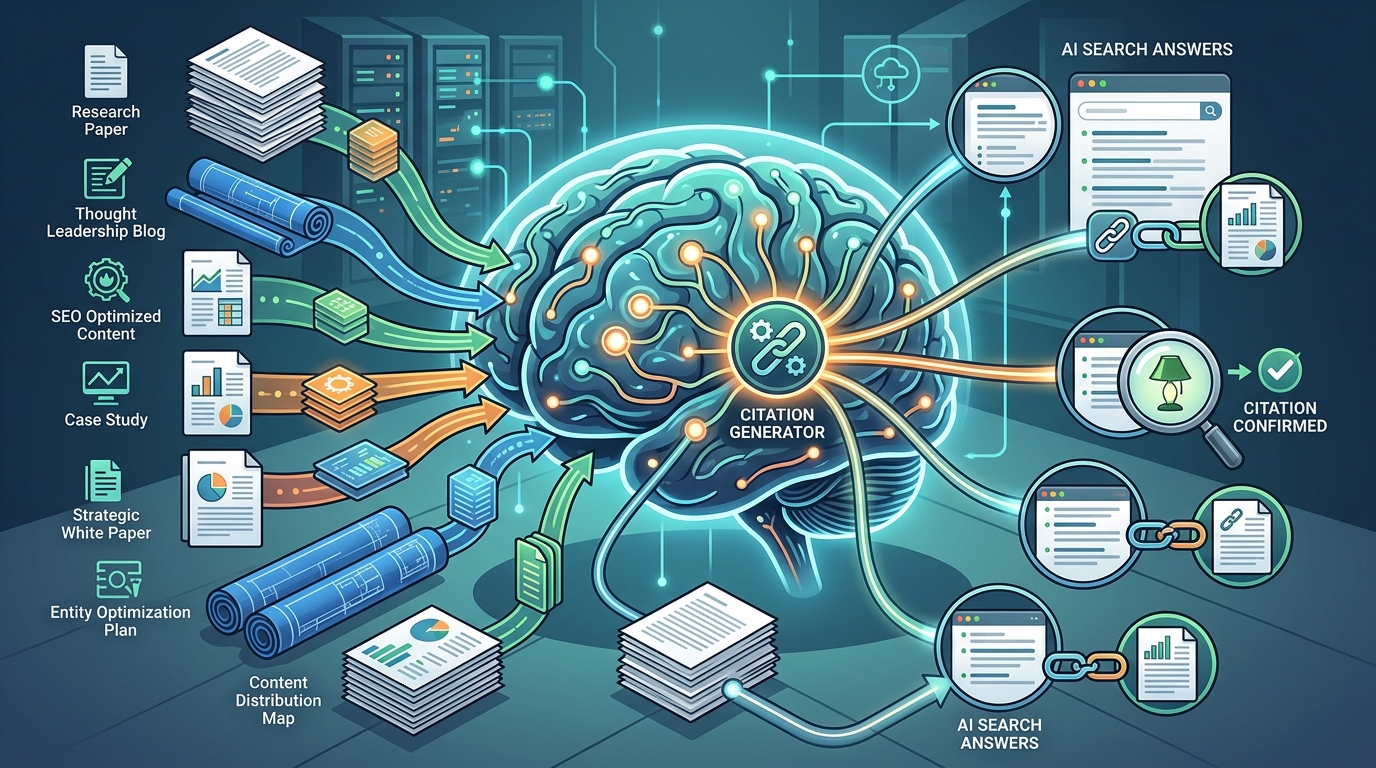
AI citation tracking is the process of monitoring how often and where your brand is mentioned in AI-generated responses. Traditional SEO tools track rankings, but they do not tell you if an AI model is recommending your brand. You need specialized tools or manual testing to see if your domain appears in the sources cited by LLMs. This tracking reveals which topics drive citations and which content is being ignored.
Monitoring LLM Responses
Teams should maintain a library of high-value queries relevant to their business. By prompting AI assistants with these queries, you can log whether your brand is cited. If you are not cited, you can analyze the sources the AI did use. This gap analysis shows you what information is missing from your site. It also highlights competitors who are successfully capturing the citation. Regular tracking allows you to adjust your content strategy based on real AI behavior.
Measuring Share of Voice
Share of voice in AI search is a new metric for B2B marketing. It measures the percentage of AI responses that mention your brand compared to competitors. A high share of voice indicates strong authority in the AI's training data and live search results. Tracking this metric over time helps you understand the impact of your content efforts. It moves the conversation from "are we ranked?" to "are we recommended?"
Generative Engine Optimization
Generative engine optimization is the broader discipline of ensuring your brand is visible in AI-generated search results. GEO encompasses both the technical structure of your website and the quality of your content. It requires a shift from keyword stuffing to entity building. AI engines rely on a web of interconnected facts. Your brand must be a central node in that web. This means your content must be consistent across your website, social profiles, and third-party directories.
Technical Foundations for AI
AI crawlers need access to your content. Ensure your website is not blocking AI bots in your robots.txt file. While some brands block bots to protect data, this prevents you from being cited. You must also use structured data, such as Schema.org markup, to help AI understand your content. Marking up your articles, authors, and organizations helps the AI verify the source of your information. This technical hygiene is the foundation of any GEO strategy.
Content Depth and Originality
AI engines prioritize original research and unique insights. If your content is a rehash of other sources, the AI will likely cite the original source instead. To win citations, you must provide data, case studies, or expert opinions that cannot be found elsewhere. This originality signals authority. It tells the AI that your brand is a primary source of information, not just a secondary aggregator. This is a critical differentiator in the B2B space.
GEO and AEO Services
Strategic Audits
A GEO audit examines how your brand appears in AI responses. It identifies gaps in your content and technical setup. The audit also analyzes competitors to see what they are doing right. This provides a roadmap for improvement. It is not just about writing more content; it is about writing the right content in the right format. The audit ensures that your investment in content is aligned with how AI systems actually work.
Implementation and Monitoring
After the audit, the agency implements changes to your website and content. This may include rewriting key pages, adding structured data, or creating new thought leadership pieces. The agency then sets up monitoring to track citation performance. This ongoing process ensures that your brand remains visible as AI models update their training data. It is a continuous cycle of optimization, not a one-time fix.
AI Citation Building
Earning Third-Party Mentions
To build citations, you need to be mentioned in industry publications, news sites, and expert blogs. This is similar to traditional link building, but with a focus on content relevance. You should pitch your original research to journalists and industry influencers. When they cite your data, it creates a signal of authority. The AI engine sees that multiple sources agree on your insights. This corroboration increases the likelihood of your brand being cited in AI answers.
Creating Citable Assets
Answer Engine Visibility
Answer engine visibility is the measure of how often your brand appears in AI-generated answers. It is a key performance indicator for modern B2B marketing. High visibility means that when a buyer asks an AI assistant for a recommendation, your brand is likely to be mentioned. This visibility drives demand without the need for paid ads. It positions your brand as a trusted authority in the eyes of the AI and, by extension, the user.
Factors Influencing Visibility
Several factors influence answer engine visibility. Content quality, technical SEO, and brand authority are the primary drivers. Content quality ensures that the AI finds your information useful. Technical SEO ensures that the AI can access and understand your content. Brand authority ensures that the AI trusts your information. All three must be present for high visibility. Focusing on just one area is not enough. You need a holistic approach that addresses all three factors.
Optimizing for User Intent
AI engines are designed to answer user questions. Therefore, your content must align with user intent. If users are asking "how to reduce supply chain costs," your content should answer that question directly. If you are writing about "supply chain management" in general, you may miss the specific intent. Map your content to the specific questions your buyers are asking. This alignment increases the chance that the AI will select your content as the answer.
B2B Content Strategy
Aligning Content with Buyer Journeys
Your content should map to the different stages of the buyer journey. Awareness content introduces your brand and expertise. Consideration content helps buyers evaluate solutions. Decision content assists in the final purchase decision. Each stage requires different types of content. For AI visibility, focus on consideration and decision content. These are the stages where buyers are most likely to ask AI for recommendations. Ensure that your content at these stages is optimized for citation.
Distribution and Amplification
Creating great content is not enough; you must distribute it effectively. Use content distribution services to amplify your reach. Share your content on LinkedIn, industry forums, and newsletters. This increases the chances of third-party mentions. It also signals to AI engines that your content is popular and relevant. Distribution is a key component of any successful B2B content strategy in the AI era.
Entity Optimization
Entity optimization is the process of defining and reinforcing your brand as a distinct entity in the digital world. AI engines understand the world in terms of entities, which are specific things like people, places, and organizations. Your brand is an entity. To be cited, the AI must clearly understand what your brand is, what it does, and how it relates to other entities. This requires consistent and accurate information across the web.
Building a Knowledge Graph
A knowledge graph is a network of entities and their relationships. AI engines use knowledge graphs to understand the context of information. You should build a knowledge graph for your brand. This includes defining your brand's attributes, such as its industry, location, and key services. You should also define relationships with other entities, such as your customers, partners, and competitors. This helps the AI place your brand in the correct context.
Consistency Across Platforms
Consistency is key to entity optimization. Your brand information should be the same on your website, LinkedIn, Crunchbase, and other directories. If there are discrepancies, the AI may become confused about your brand's identity. This can lead to incorrect citations or no citations at all. Audit your brand information across all platforms. Ensure that it is consistent and up-to-date. This consistency builds trust with AI engines.
Key Takeaways
- Answer engine optimization focuses on structuring content for direct AI extraction.
- AI citation tracking monitors how often your brand is mentioned in AI responses.
- Generative engine optimization involves both technical and content strategies.
- GEO and AEO services help brands navigate the complexities of AI search.
- AI citation building requires earning third-party mentions and creating original content.
- Answer engine visibility is a key metric for measuring AI search success.
- B2B content strategy must align with buyer journeys and AI intent.
- Entity optimization ensures your brand is clearly defined in AI knowledge graphs.
Frequently Asked Questions
What is the difference between SEO and GEO?
SEO focuses on ranking pages in traditional search engine results. GEO focuses on being cited in AI-generated answers. While they overlap, GEO requires a focus on entity building and content extractability.
How do AI engines decide which sources to cite?
AI engines use a combination of relevance, authority, and recency. They prefer sources that are highly relevant to the query, have high domain authority, and are up-to-date. Original research and expert opinions are also favored.
Can I block AI bots from my website?
You can, but it will prevent you from being cited in AI-generated answers. If you want to be visible in AI search, you should allow AI bots to crawl your website.
What types of content are most likely to be cited?
Content that provides specific, verifiable information is most likely to be cited. This includes data reports, case studies, and expert interviews. General advice is less likely to be cited unless it contains unique insights.
How long does it take to see results from GEO?
It depends on your current digital footprint and the competitiveness of your industry. It can take several months to see significant changes in AI citation frequency. Consistency and patience are key.
Do I need a specialized agency for GEO?
While you can do some GEO work in-house, specialized agencies have the expertise and tools to optimize for AI search. They can help you audit your digital footprint and implement effective strategies.