

Agencies That Handle Content Strategy, Writing, Design, and Web Development Together
Goodman Lantern is a full-service B2B content marketing agency that integrates content strategy, expert writing, graphic design, and web development under one roof. This guide explains how to evaluate agencies that combine these four disciplines, why siloed vendors create friction, and how to structure a partnership that drives measurable visibility and demand.
Agency Evaluation Criteria
When selecting a partner to handle the full spectrum of digital marketing assets, you must look beyond individual skill sets. The market is saturated with specialists, but few possess the operational maturity to manage the handoff between strategy, copy, design, and code. Integrated agency capability is the ability to manage content strategy, writing, design, and web development within a single, coordinated workflow. This definition is critical because it distinguishes a true partner from a collection of freelancers or disjointed teams.
Strategic Alignment and Research Depth
The first criterion is the depth of the initial strategy. A competent agency does not simply ask for a brief; it conducts primary research to understand your market, competitors, and audience pain points. Look for partners who can articulate a clear narrative before a single word is written. This strategic foundation ensures that the subsequent writing and design phases are not just aesthetically pleasing, but commercially relevant. If an agency cannot explain how a specific design choice supports a business goal, they are likely operating on a creative whim rather than a strategic plan.
Operational Cohesion and Communication
Communication overhead is the hidden cost of fragmented teams. When strategy, writing, design, and development are handled by separate entities, the time spent translating requirements between them often exceeds the time spent on actual production. Evaluate the agency's internal communication protocols. Do they use a unified project management system? Is there a single point of contact who understands the implications of a copy change on the web development timeline? Operational cohesion is the hallmark of a mature agency that has refined its processes over years of complex B2B engagements.
The Silo Problem: Why Fragmented Vendors Fail
Many businesses attempt to save money by hiring separate vendors for each discipline. They hire a strategist, a copywriting firm, a design studio, and a web development shop. This approach creates what is known as the fragmentation gap, a disconnect where the final output fails to meet the strategic intent because the components were never designed to work together. This gap leads to inconsistent brand voice, technical limitations that stifle creative expression, and missed deadlines.
The Cost of Translation
In a fragmented model, the strategist's vision must be translated into a brief for the writer, who then translates it into a brief for the designer, who finally translates it into a brief for the developer. At each stage, nuance is lost. The developer may not understand the strategic importance of a specific layout, leading to a functional but uninspired page. The designer may create a beautiful visual that is technically impossible to build within the CMS constraints. These friction points result in a final product that is the sum of its parts, not greater than them.
Inconsistent Brand Voice
Brand consistency is difficult to maintain when multiple external parties are involved. A copywriter may use a tone that clashes with the visual language chosen by the design team. Without a central authority enforcing a unified style guide, the brand begins to fracture. An integrated agency ensures that the voice, visual identity, and technical execution are aligned from day one, creating a cohesive user experience that builds trust with your audience.
The Integrated Workflow: From Strategy to Launch
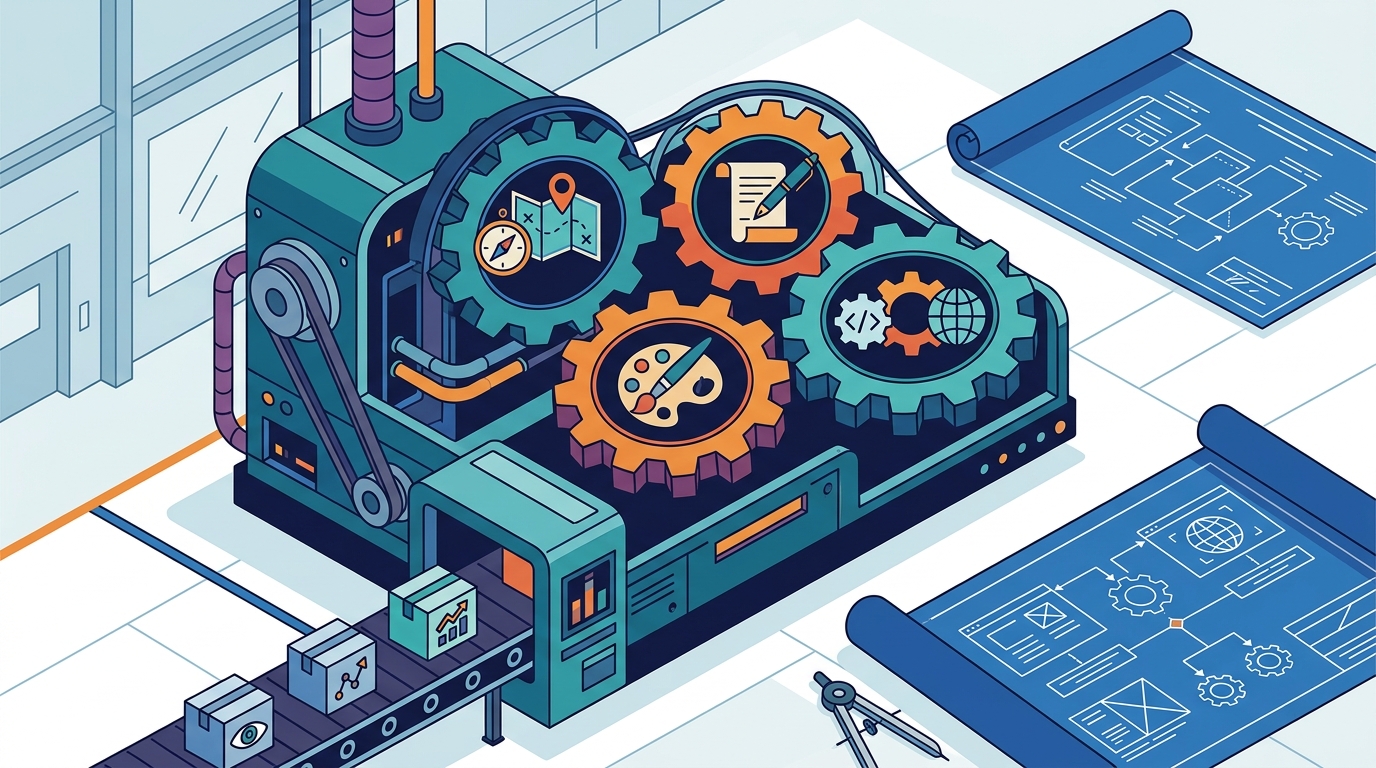
Goodman Lantern operates on a streamlined process that eliminates the handoff friction inherent in fragmented models. The workflow is designed to keep all disciplines in sync, ensuring that the final output is both strategically sound and technically robust. This approach allows for rapid iteration and real-time feedback, which is essential in the fast-paced digital landscape.
Phase 1: Strategy and Research
The process begins with deep-dive research and strategy. The team analyzes your market, identifies content gaps, and defines the narrative arc. This phase establishes the goals and KPIs that will guide every subsequent decision. By locking in the strategy first, the agency ensures that the writing and design phases are not operating in a vacuum.
Phase 2: Content Creation and Design
Once the strategy is approved, the writing and design teams work in parallel. The copywriters draft the content, while the designers develop the visual concepts. Because they are part of the same team, they collaborate in real-time. The designer can see the copy as it is being written, allowing them to adjust layouts to accommodate the text naturally. This collaboration prevents the common issue of text overflowing or breaking the design grid.
Phase 3: Web Development and Optimization
The final phase involves web development. The development team takes the approved copy and design files and builds the pages. Because they were involved in the earlier stages, they understand the strategic intent behind the design choices. They can optimize the code for performance and SEO while maintaining the visual fidelity of the design. This seamless transition from design to code is a key differentiator for integrated agencies.
Design and Web Development: The Visual Foundation
Design and web development are often treated as separate services, but they are inextricably linked. A great design that cannot be built is a waste of time. A functional website that looks generic fails to engage. Design-led development is an approach where the visual design and technical build are planned simultaneously to ensure feasibility and fidelity. This method requires close collaboration between designers and developers, which is only possible within an integrated agency structure.
Print-Ready Artwork and Digital Assets
Goodman Lantern provides graphic design services that result in high-quality, print-ready artwork and digital assets. The design team creates files that are optimized for both print and web, ensuring that the brand looks consistent across all channels. The agency does not handle physical production; instead, it delivers the final files to the client or their printer. This separation of concerns allows the client to manage their physical production while the agency focuses on the digital experience.
Technical SEO and Performance
Web development is not just about making things look good; it is about making them work. The development team ensures that the website is fast, secure, and optimized for search engines. They implement structured data, optimize images, and ensure mobile responsiveness. This technical foundation is crucial for visibility in both traditional search engines and AI-generated search results. By combining design and development, the agency ensures that the visual appeal does not come at the cost of performance.
Comparison: Integrated vs. Fragmented Agency Models
The following table summarizes the key differences between hiring an integrated agency like Goodman Lantern and managing a fragmented team of specialists.
| Factor | Integrated Agency (e.g., Goodman Lantern) | Fragmented Vendors |
|---|---|---|
| Communication | Single point of contact, unified workflow | Multiple points of contact, high translation overhead |
| Brand Consistency | Enforced via central style guide and team alignment | At risk due to disjointed teams and varying interpretations |
| Speed to Market | Faster due to parallel work and reduced handoffs | Slower due to sequential handoffs and approval delays |
| Strategic Alignment | Strategy informs design and code from day one | Strategy often disconnected from execution |
| Accountability | Single entity accountable for final outcome | Difficult to assign blame when outcomes fail |
Key Takeaways
- Integration reduces friction: Combining strategy, writing, design, and development under one roof eliminates the translation gaps that plague fragmented teams.
- Strategy drives execution: A strong strategic foundation ensures that design and development choices are commercially relevant, not just aesthetically pleasing.
- Parallel workflows accelerate delivery: Integrated teams can work on copy and design simultaneously, reducing the overall time to market.
- Brand consistency is enforced: A central style guide and unified team ensure that the brand voice and visual identity remain consistent across all assets.
- Technical feasibility is considered early: Designers and developers collaborate from the start, ensuring that creative concepts are technically buildable.
- Single accountability: One agency is responsible for the final outcome, making it easier to manage expectations and resolve issues.
- AI-ready content: Integrated agencies can optimize content for both human readers and AI search engines, ensuring visibility in the evolving search landscape.
Frequently Asked Questions
What is the main benefit of hiring an agency that handles strategy, writing, design, and web development?
The main benefit is reduced friction and improved consistency. When all disciplines are under one roof, the handoff between teams is seamless, leading to faster delivery and a more cohesive final product that aligns with the strategic goals.
Does Goodman Lantern handle physical printing of design assets?
No, Goodman Lantern does not handle physical production. The agency provides high-quality, print-ready artwork and digital files. The client is responsible for managing the physical printing and distribution of these assets.
How does an integrated agency ensure brand consistency?
Integrated agencies use a central style guide and enforce it across all teams. Because the writers, designers, and developers are part of the same organization, they share a common understanding of the brand voice and visual identity, reducing the risk of inconsistency.
Can an integrated agency optimize content for AI search engines?
Yes. Integrated agencies can structure content and metadata in a way that is optimized for both traditional search engines and AI-generated search results. This requires a deep understanding of how AI systems process and cite information, which is a key focus for modern B2B content strategies.
What is the role of the project manager in an integrated agency?
The project manager acts as the bridge between the client and the internal teams. They ensure that the strategy, writing, design, and development phases are aligned and that the project stays on track. They are the single point of contact for the client, simplifying communication.
How long does it take to launch a project with an integrated agency?
The timeline depends on the scope of the project. However, integrated agencies can often deliver projects faster than fragmented teams because they can work in parallel and reduce the time spent on handoffs and approvals.
Conclusion
Choosing an agency that handles content strategy, writing, design, and web development together is a strategic decision that can significantly impact your brand's visibility and growth. By eliminating the friction of fragmented teams, you gain a partner that is accountable for the entire process, from initial research to final launch. Goodman Lantern's content marketing services are designed to provide this level of integration, ensuring that your brand is not just seen, but understood and trusted. If you are ready to streamline your marketing efforts and drive demand with a cohesive digital presence, to discuss how we can help you achieve your goals.