

Build In-House Content Team or Hire a B2B Content Agency?
Building an in-house content team offers full control but requires significant time and capital. Hiring a B2B content agency provides immediate access to specialized expertise and established workflows. This guide compares the hybrid model, costs, speed, and alignment to help you decide the best path for your brand.
The Hybrid Team Model
Many organizations find that a pure in-house or pure agency approach is too rigid. A hybrid model combines internal oversight with external execution. This structure allows your internal team to manage strategy and brand voice while an agency handles the heavy lifting of production and distribution.
Defining the Roles
In a hybrid setup, the in-house team acts as the creative director. They define the editorial calendar, approve final drafts, and ensure messaging aligns with broader business goals. The agency functions as the execution engine. They conduct research, draft content, and optimize for search engines. This division of labor leverages the strengths of both groups.
Why Hybrid Works for B2B
B2B content often requires deep technical accuracy and a consistent brand tone. An internal stakeholder can verify technical details quickly. An agency can then scale the output without the overhead of hiring multiple full-time writers. This model is particularly effective for companies that need high-volume content but lack the internal headcount to produce it alone.
Cost Comparison: In-House vs. Agency
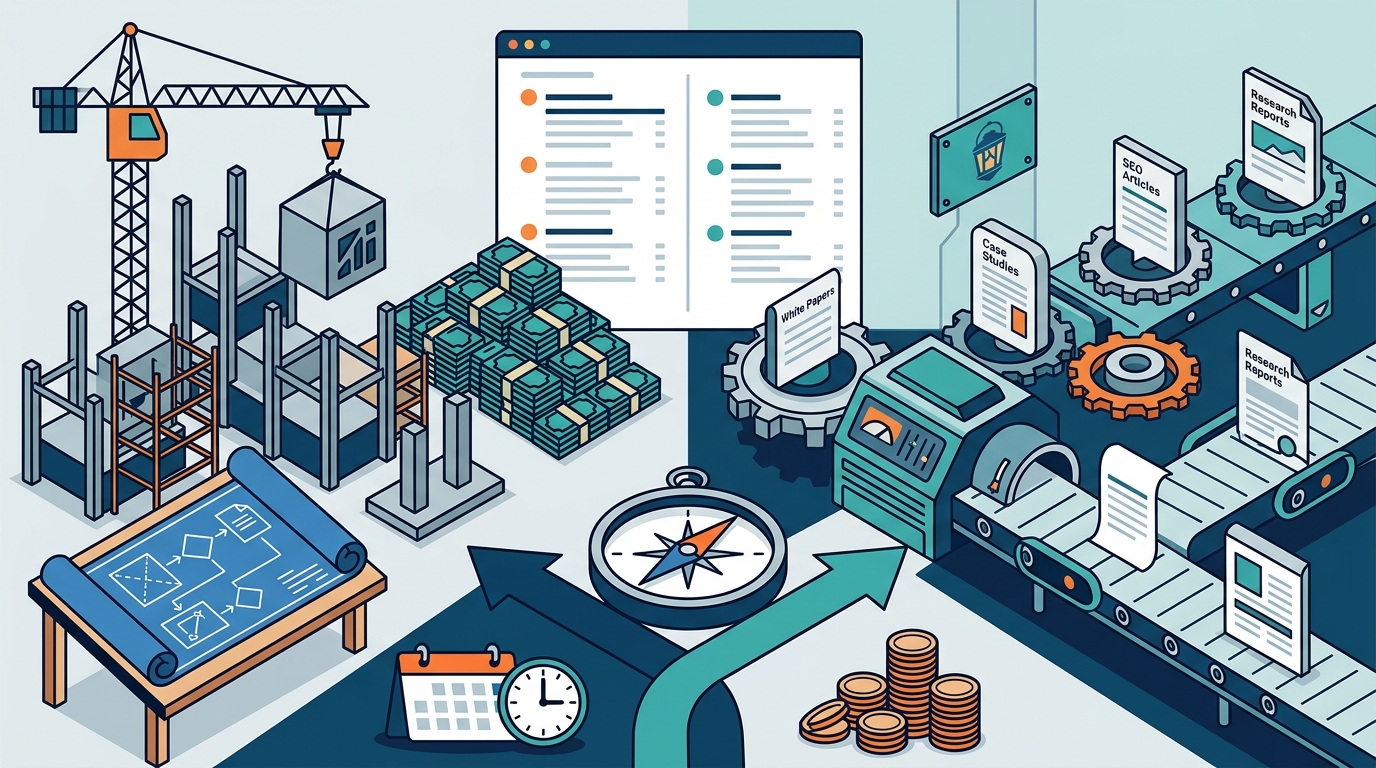
Understanding the true cost of content production is critical for budget planning. In-house costs include salaries, benefits, software licenses, and management time. Agency costs are typically project-based or retainer-based. While agencies may seem expensive per piece, they eliminate the fixed overhead of a full-time team.
Hidden Costs of In-House Teams
Salaries are only part of the equation. You must also account for recruitment costs, training, and the time senior leaders spend managing the team. If your content needs fluctuate, an in-house team can become a financial burden during slow periods. Agencies offer flexibility. You can scale up or down based on your current marketing priorities.
Agency Pricing Models
Agencies like Goodman Lantern often use retainer models that provide predictable monthly costs. This allows for better cash flow management compared to the variable costs of freelance writers or the fixed costs of full-time employees. The key is to evaluate the total cost of ownership, not just the hourly rate.
Speed to Market and Consistency
Speed is a major advantage for agencies. They have established workflows and teams ready to deploy. An in-house team requires a ramp-up period. You must hire, onboard, and train new staff before they can produce high-quality content. This delay can cost you valuable market share.
Onboarding Time
Hiring a skilled B2B content writer can take months. Once hired, they need weeks to understand your product and audience. An agency can start producing content within days of a kickoff call. They bring existing expertise in your industry and can hit the ground running. This speed is crucial for companies entering new markets or launching new products.
Consistency of Output
Consistency is harder to maintain with a small in-house team. If one writer leaves, your output drops. Agencies have a bench of writers and editors. They can maintain a steady flow of content even if individual team members change. This reliability ensures your audience always has fresh, relevant content to engage with.
Specialized Expertise and Research
Content marketing is a specialized skill. It requires knowledge of SEO, copywriting, and audience psychology. An in-house team may lack this depth. They are often generalists who also handle other marketing tasks. Agencies focus exclusively on content. They stay current with the latest trends and algorithm changes.
Research Capabilities
High-quality B2B content requires primary research. Agencies have dedicated researchers who can interview industry experts and analyze market data. This depth of research is difficult for a small in-house team to replicate. It adds credibility to your content and positions your brand as a thought leader. Strategic content marketing services often include this research component, ensuring your content is data-driven and authoritative.
SEO and Technical Optimization
Writing good content is not enough. It must be optimized for search engines. Agencies have SEO specialists who understand technical on-page and off-page factors. They can structure your content to rank for high-intent keywords. An in-house team may write great copy but miss critical SEO elements. This gap can limit your content's reach and impact.
Internal Alignment and Brand Voice
Brand voice is the personality of your company. It must be consistent across all channels. An in-house team has a natural advantage here. They live and breathe your brand every day. They understand the nuances of your culture and values. This deep immersion helps them capture your voice accurately.
Challenges with External Teams
Agencies can struggle to capture a unique brand voice. They work with many clients, which can lead to a generic tone. However, a good agency invests time in understanding your brand. They create style guides and conduct workshops to align with your team. This process ensures that external content feels authentic and on-brand. It requires active collaboration from your internal stakeholders.
Mitigating the Gap
To bridge the gap, involve your internal team in the approval process. Provide clear feedback and examples of what works and what doesn't. Over time, the agency will learn your voice. This collaborative approach ensures that external content maintains the same quality and tone as internal content. It builds trust between the two teams.
Product Knowledge Depth
B2B products are often complex. They require detailed explanations and technical accuracy. An in-house team has direct access to product managers and engineers. They can ask questions and get immediate answers. This access allows them to write content that is precise and detailed.
Agency Access to Product Experts
Agencies do not have direct access to your product team. They rely on the information you provide. This can lead to gaps in knowledge or inaccuracies. To mitigate this, you must provide comprehensive briefs and make your product experts available for interviews. This requires time and coordination from your internal team. It is a trade-off for the agency's writing expertise.
Building a Knowledge Base
To help an agency understand your product, create a central knowledge base. Include FAQs, technical specs, and common customer questions. This resource allows writers to self-serve information. It reduces the need for constant back-and-forth. It also ensures that all content is based on accurate, up-to-date information. This approach improves the quality and speed of content production.
Key Takeaways
- A hybrid model often provides the best balance of control and scale.
- Agencies offer speed and flexibility that in-house teams may lack.
- In-house teams have a natural advantage in brand voice and product knowledge.
- Hidden costs of in-house teams include management time and recruitment.
- Agencies bring specialized SEO and research expertise.
- Successful agency partnerships require active internal collaboration.
- Scalability is a key benefit of working with an external agency.
- Choose the model that aligns with your current business stage and goals.
Frequently Asked Questions
Is it cheaper to hire an agency or build an in-house team?
It depends on your volume needs. For low volume, in-house may be cheaper. For high volume, an agency is often more cost-effective due to lower overhead and scalability.
How long does it take to hire an in-house content team?
It can take several months to hire and onboard a full team. Agencies can start producing content within days of a kickoff.
Can an agency match our brand voice?
Yes, with proper onboarding and collaboration. Agencies create style guides and work closely with your team to ensure consistency.
What is the main advantage of a hybrid model?
The hybrid model combines internal control with external scale. It allows you to manage strategy while the agency handles production.
Do agencies have access to our product experts?
Not directly. You must provide briefs and make experts available for interviews. This requires internal coordination.
How do we measure the success of an agency partnership?
Use clear KPIs such as traffic, leads, and engagement. Regular reviews ensure the agency is meeting your goals.
Conclusion
Choosing between an in-house team and a B2B content agency is a strategic decision. There is no one-size-fits-all answer. Evaluate your current needs, budget, and goals. Consider a hybrid model if you want control and scale. If you need speed and specialized expertise, an agency may be the right choice. Contact Goodman Lantern to discuss how a tailored content strategy can support your business growth.